
Getting hurt is like a full stop on your fitness trip. You are running or training one minute and questioning your life decisions the next. If that happens to you, you are not alone.
Thousands of people see a sports injury physio in Galway every year for the same reason. The good news is that you can make a successful recovery and return to enjoying the things you love safely and with confidence with the right rehabilitation program.
So, what actually goes on in a sports injury rehabilitation program? Let us walk you through step by step.
Understanding the Process at a Sports Injury Clinic Galway
Rehabilitation is not merely healing an injury. It is also maintaining your strength as well as avoiding the same injury from occurring again. A Sports Injury Clinic Galway puts you through a process that includes both. Let us discuss what exactly this process looks like.
Step 1 – The Initial Assessment
This is where everything begins. The physiotherapist first asks questions about how and when the injury happened. They might also ask about your training habits and your general health. Then comes a physical examination.
You may be required to move your body in specific ways so that they can assess your range of motion and the level of pain. The objective is straightforward: to identify the precise cause of the issue and choose the appropriate treatment plan. The examination enables the therapist to view the larger picture rather than the damaged area.
Step 2 – Developing a Tailored Plan
After your evaluation, the therapist develops a program tailored to you and your lifestyle. There is no one-size-fits-all approach. Someone recovering from a shoulder strain will have a very different program from someone with a knee injury.
At this point, your therapist works towards three key objectives. The first is to minimize pain and swelling. The second is to regain mobility. The third is to regain strength. Each session is tailored towards helping you achieve these objectives one step at a time.
Step 3 – Early-Stage Recovery
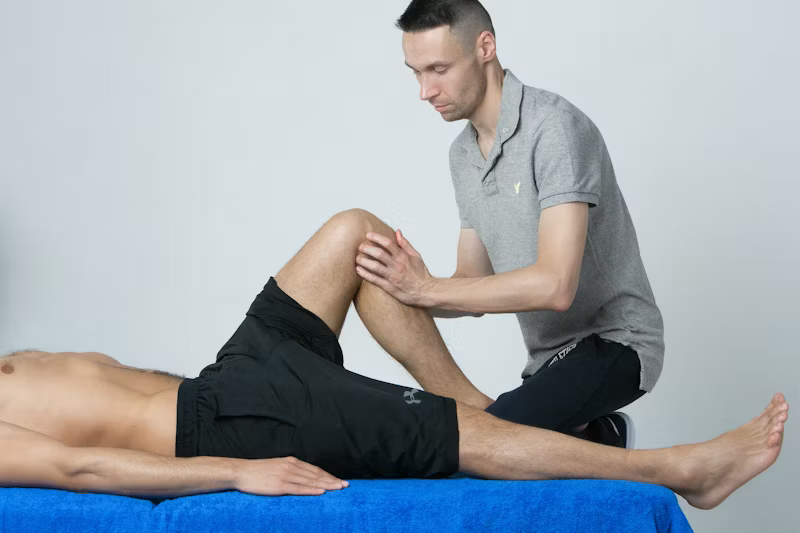
During the initial stage, the object is comfort and security. Your physiotherapist will probably employ gentle modalities such as ice therapy and massage. Occasionally, they will employ low-level exercises to maintain your muscles healthy but avoid stressing the damaged spot.
It is annoying to begin slowly, but your body must have time to heal. The concept is to enable you to feel improved but avoid stiffness and muscle atrophy.
Step 4 – The Power of Sports Massage
Most sports physio clinics in Dublin or Galway incorporate massage therapy as part of their rehab programs. Sports massage isn’t about relaxation. It increases blood circulation and accelerates your muscle recovery.
You may feel slight soreness after a session, and that’s perfectly normal. It means your muscles are responding. Over time, you’ll notice better flexibility and less tightness in your body.
Step 5 – Building Strength and Control
It’s time to rebuild strength once your pain is under control. Your physiotherapist will guide you through exercises that focus on balance and muscle coordination. These exercises make sure your body can handle pressure again without risk.
You might start with simple bodyweight moves and progress to resistance training. This phase is where you start to feel stronger and more confident in your movements.
Why Strength Training Matters
A fit body is a safe body. Making the muscles around your injured region stronger will help spread the load throughout your joints. It prevents potential future injuries and enables you to perform optimally.
If you ever felt apprehensive about going back to sport, this phase will restore that confidence in your body.
Step 6 – Advanced Movement Training
This phase emphasizes regaining speed and agility. Sport-specific drills and functional training are common. A football player may do controlled kicks, for instance. A runner may improve his/her sprint starts.
This phase of rehab is great because it makes you remember that your return is imminent. Your form will be checked by your therapist, and the intensity will be leveled off with your progress.
Staying Mentally Strong
Rehabilitation isn’t only physical. It can also try your patience and mentality. There are going to be times when you’ll feel stuck, and that’s okay. The thing is to remain consistent and have faith in the process. Keep in mind, all those small steps add up.
Opening up with your therapist also works. They’re able to encourage you and keep you going when recovery seems to be moving slowly.
Step 7 – Return to Play
The last step is the one everyone is waiting for. But first, your physiotherapist will perform some performance tests on you before you get back to training. These test your endurance and mobility.
You can return to your sport safely after you’ve completed these. It is wonderful to be able to move at last, knowing your body has had the necessary preparation.
The Role of a Sports Injury Physio Galway
A Galway or Dublin sports injury physio not only fixes injuries. They show you how to avoid them in the future. Prevention is a major element of long-term success. You’ll get taught warm-up exercises and good posture advice.
You also learn how to listen to your body. Pain is not something to be dismissed. It is your body’s way of calling for care and recuperation.
Real-Life Example
Picture an amateur athlete who sprains their ankle while training. Rather than waiting it out, they go to a sports physiotherapy in Dublin. The physio evaluates the injury and creates a recovery program. In a matter of weeks, the athlete is walking pain-free. In a couple of months, they will be running again, better than ever.
That is what controlled rehabilitation accomplishes. It turns setbacks into a chance to return stronger.
Consistency and Recovery
Consistency is what makes good recovery great recovery. Taking your exercises at home and heeding your physio’s instructions is as important as the clinic sessions. It’s a matter of teamwork between you and your therapist.
Missing steps or coming back too early can erase weeks’ worth of work. Rather, concentrate on arriving every day and executing the little things correctly. With time, these accumulate and make you stronger and more stable. Healing is not a race, remember. It’s a gradual ascent that becomes smoother when you remain patient and have faith in the process.
FAQs
1. How long does sports injury rehabilitation take?
It varies with the nature and severity of your injury. Very small strains may take a few weeks, whereas severe injuries take a few months. Your physiotherapist will provide you with a definitive period depending on your recovery.
2. Can I exercise during rehabilitation?
Yes, but only with your physiotherapist’s permission. Gentle exercise allows strength and mobility to be maintained. The trick is to do safe motions that aid recovery rather than hinder it.
3. Do I go to a clinic for minor sports injuries?
It’s worth checking, even for small ones. A sports injury physio Galway can allow you to recover more quickly and avoid pain coming back later.
Conclusion: Why Rehabilitation Works
Recovery from a sports injury is not merely healing the tender spot. It’s learning about your body and providing it with the appropriate tools to get better completely. With the assistance of a professional sports injury physio Galway, you can progress from agony to achievement without fear.
The recovery process may challenge your patience, but it also enhances your confidence. You pick up new maneuvers to move, train, and guard yourself. Therefore, the next time an injury leaves you moving slowly, recall that recovery is not termination. It’s a new beginning that puts you on your feet and back in the game.
Visit our website to learn more about how sports massages work.
